
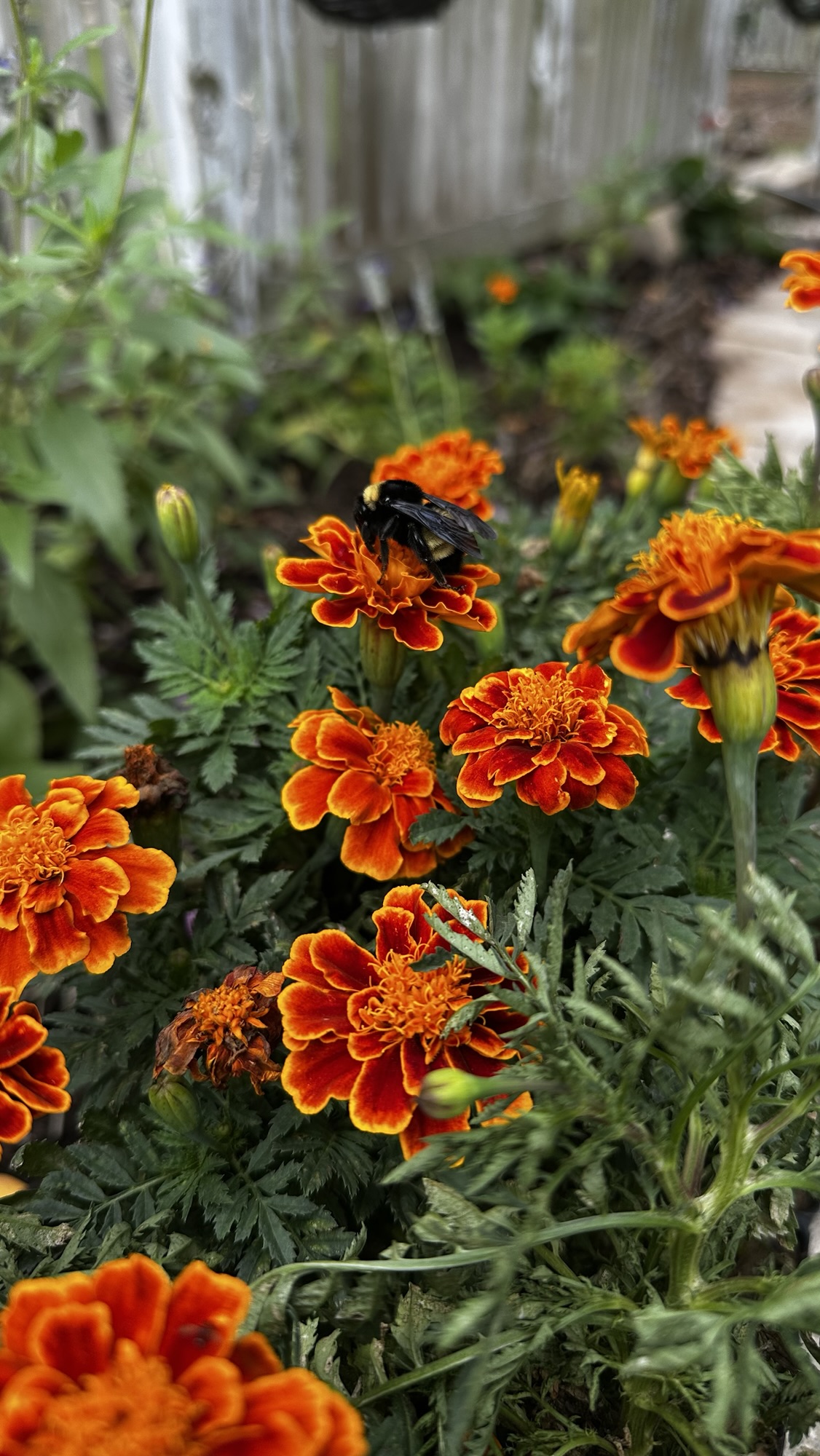
Gardening is a labor of love, a constant negotiation with nature and, sometimes, our domestic companions! Yesterday was a perfect example. As I was carefully planting new flats of marigolds to join the hardy May Knight Salvia that survived a feline romp, I was delighted—and momentarily halted—by my most important visitors. A multitude of beautiful bumblebees arrived, eager to partake in the nectar and continue their crucial work of pollination.
The scene unfolded in the patch you see here:

I watched, fascinated, as the bees moved back and forth between the marigolds and the salvia. It was a delicate dance; every time I reached for a space to plant, a bee would claim the exact marigold I intended to use. I found myself patiently navigating from one flat to another, carefully avoiding disturbing our precious, buzzing coworkers. The pups were there too, sniffing the flowers and adding to the peaceful, albeit busy, atmosphere. It was a reminder of why we do this—to create a haven for these vital creatures.
A Crucial Conservation Tip: Darkness is a Pollinator’s Best Friend
Which brings me to a very important topic that came up recently. A neighbor asked why I’ve completely disabled all my backyard landscape and solar lights. It’s a common question, as many people assume accent lighting is harmless, or even helpful, for navigating their gardens at night.
However, the science is clear: artificial light after dark is detrimental to nocturnal and crepuscular pollinators. Many pollinators are active at night, navigating by the moon and stars. Landscape lighting disorients them, disrupts their foraging patterns, interferes with their mating rituals, and exhausts them by drawing them into light sources, where they become easy prey or die of exhaustion. It’s a form of light pollution that can decimate local populations of moths, beetles, and even some bees that have different activity cycles.
Therefore, solar lights, pathway spotlights, and any form of artificial illumination in pollinator sanctuaries are no longer welcome in any of my gardens. True conservation requires respecting their biological rhythms, not just their daytime foraging needs.
As we transition deeper into autumn—truly Scorpio season, with all its depth, transformation, and mystery—let’s commit to creating spaces that are not just beautiful for us, but truly hospitable to life at all hours. Turn off the lights, and let the garden sleep. 🍂🍁🦂


I'm interested in hearing your thoughts! Please leave a reply...